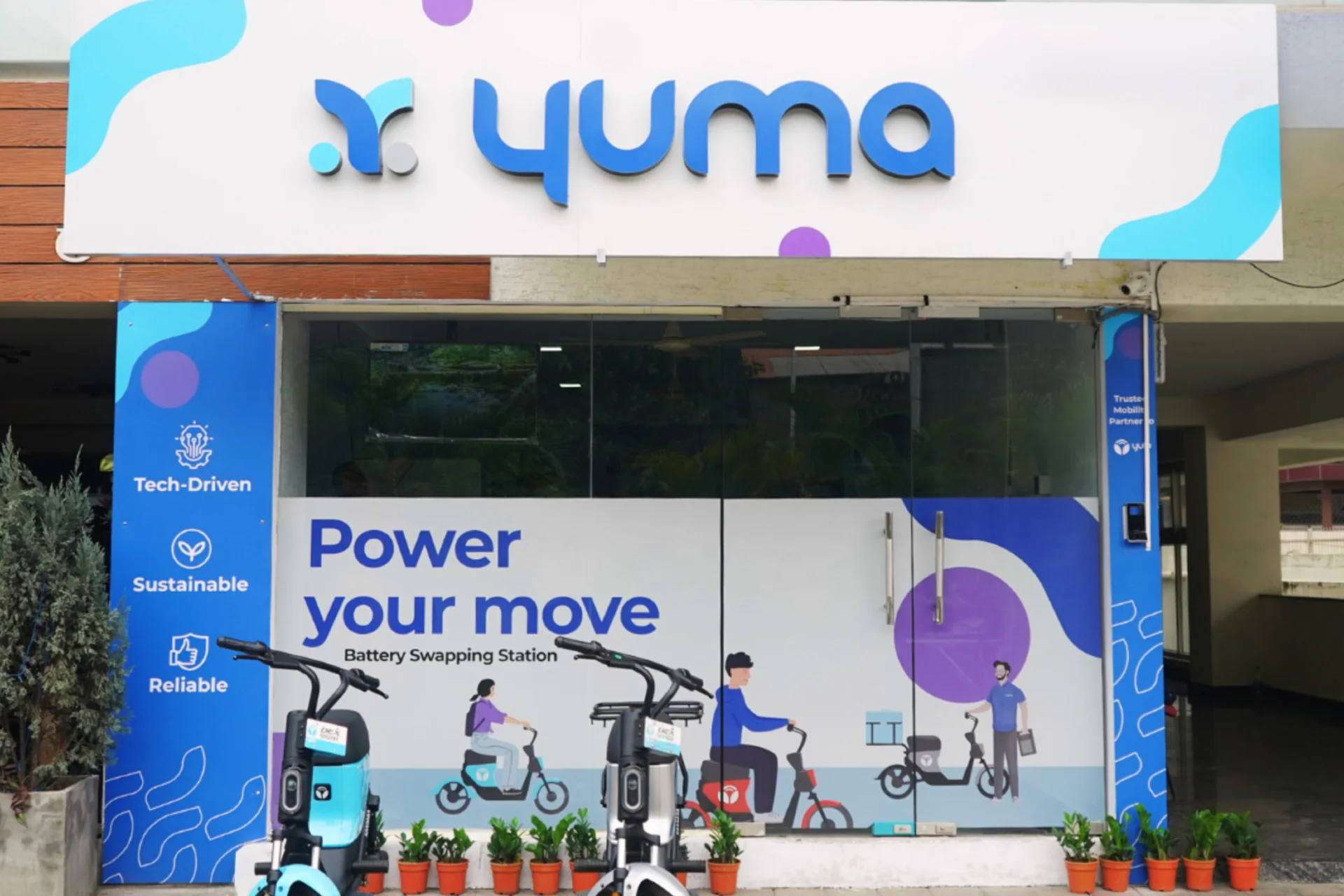
Magna International is deepening its bet that India's electric two-wheeler revolution will be won at the socket - or rather, at the swap station - committing a fresh $35 million to Yuma Energy, a battery-swapping network builder operating across Indian cities.
Yuma's model addresses the central friction of electric two-wheelers in a market of delivery riders and daily commuters: charging time. Instead of waiting hours at a wall socket, riders pull into a neighborhood cabinet, exchange a depleted pack for a full one in under a minute, and pay per swap. The company has deployed hundreds of such stations and reports utilization economics that improve with density, the same logic that made ride-hailing profitable block by block.
For Magna, the investment extends a strategy of positioning across the electric mobility stack rather than betting on a single vehicle maker. The Canadian auto supplier has backed charging, energy storage and lightweighting ventures worldwide, and views India's swap ecosystem as a template that could travel to Southeast Asia, Africa and Latin America, where two-wheelers already dominate urban transport and grid capacity is thin.
The policy tailwind is real. Indian state governments have begun standardizing battery form factors to make swapping interoperable, and central incentives favor local assembly of packs and stations. Skeptics note that capital intensity, real estate costs and competition from fast-charging networks could compress returns. Magna's repeated checks suggest it believes the opposite: that whoever owns the swap infrastructure will own the customer relationship for a generation.