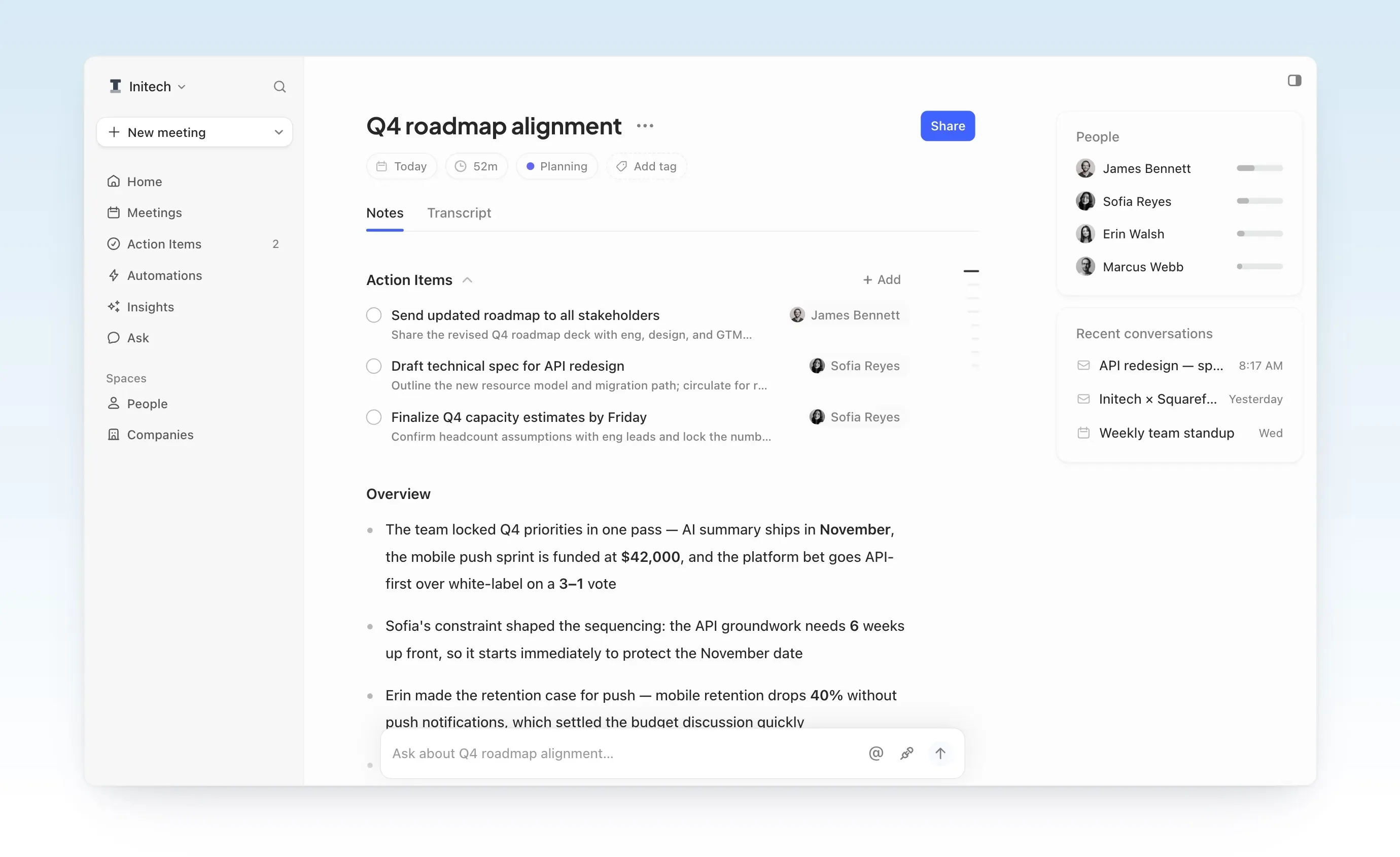
The artificial-intelligence meeting-notes market has quietly become one of the most crowded corners of the startup economy, and Circleback is responding the way consumer software companies almost always do when growth slows: it is opening the doors wider. The note-taking startup announced a genuinely free tier, stripping the paywall from core transcription and summarization features in a move designed to pull casual professionals into its funnel and monetize them later through power users, teams and enterprise contracts.
Circleback's pitch has always been that no one should have to choose between paying attention in a meeting and writing down what was said. The product records conversations across video calls and in-person discussions, then produces searchable transcripts and summaries. Until now, much of that functionality sat behind a subscription, placing the company at a disadvantage against rivals that dangle free plans or ride inside larger productivity suites.
Analysts of the so-called ambient-work category see the change as defensive and offensive at once. Free tiers, they argue, are cheap customer-acquisition engines when inference costs keep falling, and the data they generate helps tune models. But the approach carries risk: a flood of non-paying users can strain infrastructure and blur the line between features that belong in the free product and those worth charging for.
For Circleback, the calculation is ultimately about gravity. Meeting intelligence is becoming a default expectation rather than a novelty, and the startups that own the habit now, even among users who never pay a cent, are positioned to be the ones employers standardize on when budgets finally arrive.