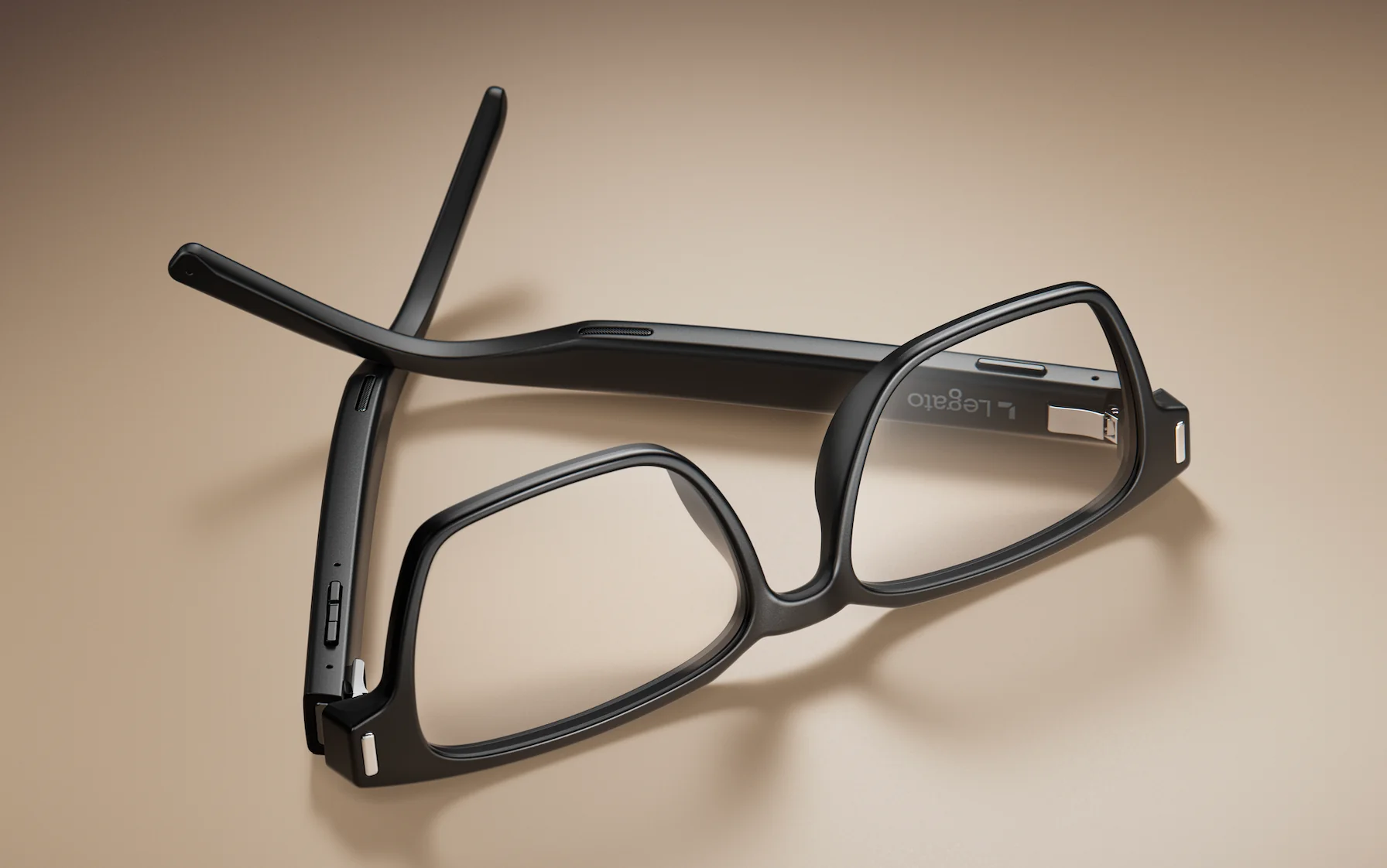
Legato, a hearing technology startup that has operated in stealth since its founding, has finally stepped into public view — and it arrives with a $12M funding round, a founding team drawn from some of the most demanding hardware programs in consumer electronics, and a first look at the product that consumed its quiet years: a pair of AI-powered hearing glasses.
The device reflects a thesis gaining traction across the wearables industry: the ear, not the wrist, may host the next breakout health category. Legato's glasses integrate directional microphones, an on-device neural processor, and adaptive sound-shaping algorithms that amplify conversation while suppressing ambient noise. Because the compute lives in the frame rather than in a traditional hearing-aid shell, the company argues it can deliver clinical-grade assistance without the aesthetic and insurance friction that has long suppressed adoption.
The $12M round, supported by backers familiar with the regulatory maze of audio health devices, will fund the company's path toward FDA clearance for its over-the-counter feature set, alongside initial manufacturing scale-up. Leadership frames the financing as a bridge to commercial launch rather than a proof-of-concept exercise, citing encouraging early results from internal listening trials.
Legato enters a crowded field that includes incumbent hearing-aid manufacturers and smart-glass giants alike. Its wager is that convergence — prescription-free hearing assistance folded into eyewear people already wear — will prove more persuasive than any single category, and that a generation reluctant to identify as hearing-impaired will happily identify as glasses-wearers.