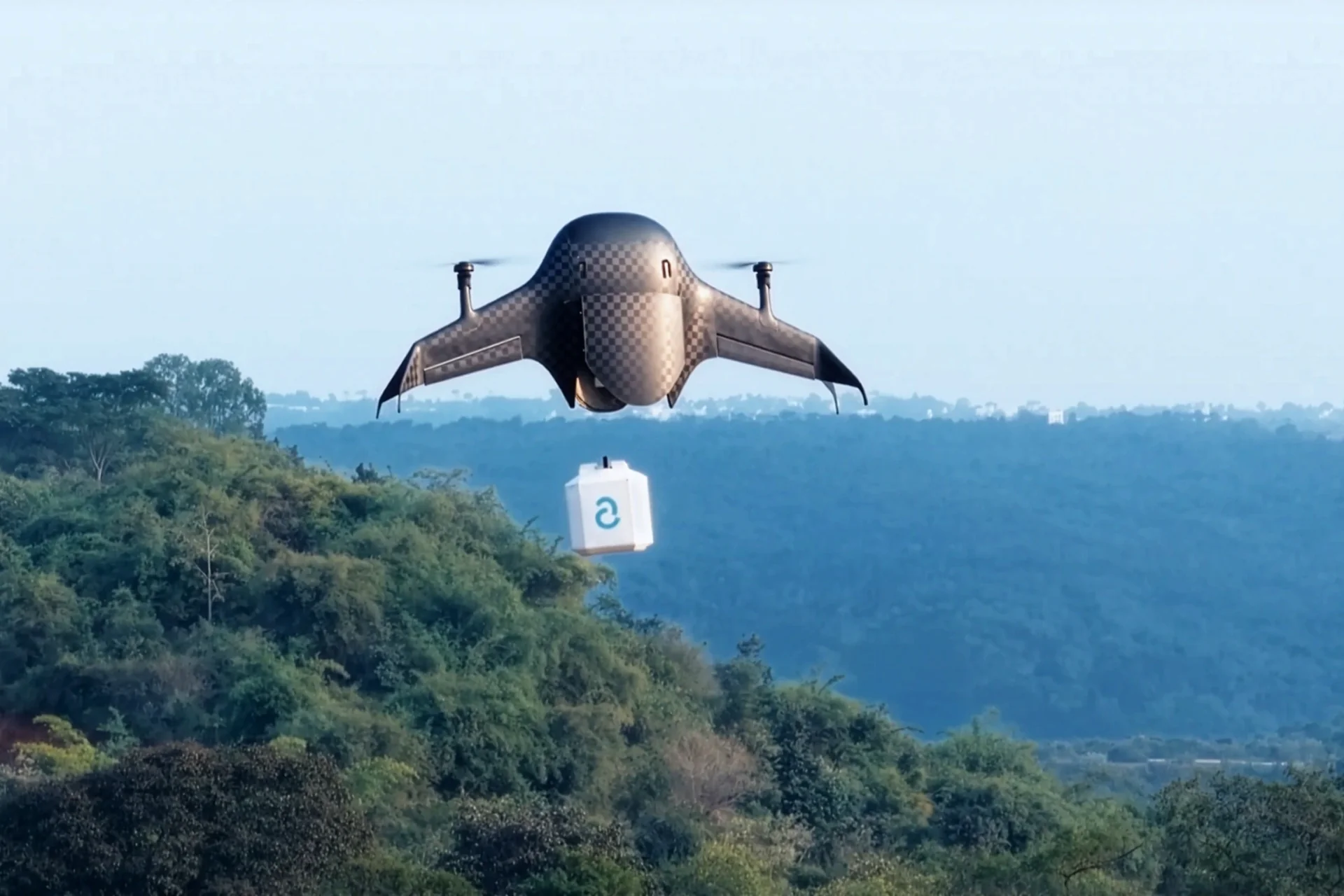
India's freight corridors, long dominated by aging diesel trucks crawling along congested highways, have attracted a new kind of challenger. Airbound, a Bengaluru-based autonomous aviation startup, has secured $37 million in fresh funding to scale a fleet of rocket-assisted cargo drones designed to move heavy parcels between regional hubs at speeds conventional ground logistics simply cannot match. The round will finance flight certification, a larger manufacturing footprint and the ground-network infrastructure needed to turn experimental hops into a repeatable commercial freight service.
The company's vehicles are unusual even by drone-industry standards: vertical takeoff powered by compact rocket thrusters, transitioning to efficient wing-borne cruise once airborne. That architecture lets the aircraft lift payloads measured in hundreds of kilograms rather than the few kilograms typical of battery-only quadcopters, a capability Airbound executives describe as the difference between a courier toy and a genuine truck replacement on busy corridors.
Investors see timing on their side. Indian e-commerce volumes are compounding rapidly, state road-building has failed to keep pace, and logistics costs still consume an outsized share of the country's GDP. Government officials have simultaneously signaled openness to regulated cargo corridors and droneports, lowering one of the sector's most stubborn barriers to entry.
Analysts caution that capital intensity, noise concerns and insurance economics remain unproven at scale. Still, the consensus among venture observers is blunt: if any startup can make autonomous heavy freight commercially credible in South Asia, Airbound now finally has the balance sheet required to attempt it.