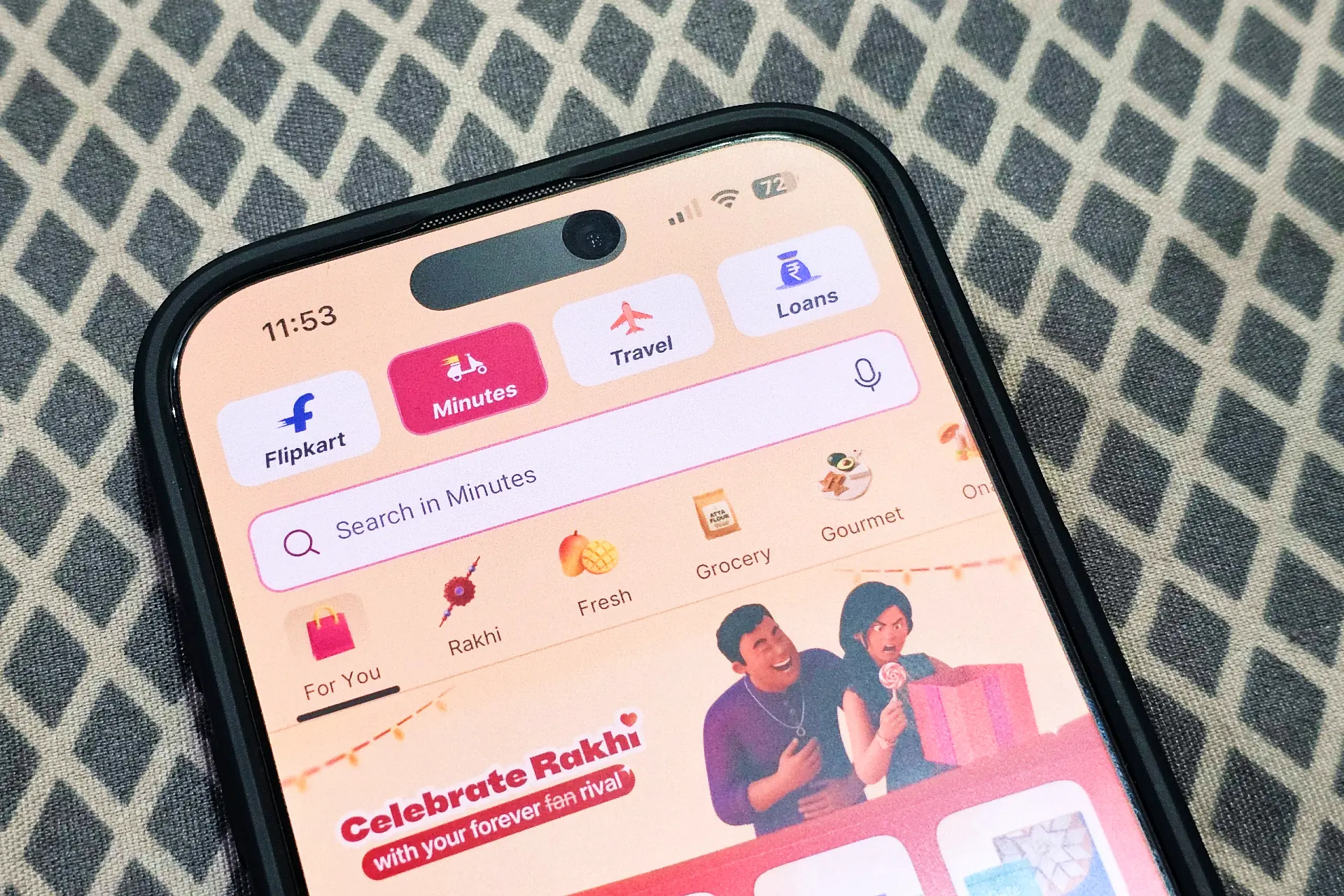
Walmart-backed Flipkart opened its quick-commerce operation barely two years ago, yet the Indian e-commerce veteran is now closing the gap with Blinkit and Zepto, the fresh-grocery speed merchants that redefined urban delivery expectations across the country's major metros. Quarterly disclosures and third-party order tracking suggest Flipkart's instant delivery arm has moved decisively into the top tier of volume, fueled by aggressive dark-store expansion and the deep supplier relationships its parent company brings to the negotiating table.
The strategy differs from its rivals in one important structural way. Where incumbents built venture-subsidized delivery networks entirely from scratch, Flipkart converted existing wholesale and fulfillment infrastructure into ten-minute delivery capability, creating a cost advantage that analysts believe will matter most once the discounting wars finally fade. Its catalog also skews toward higher-ticket general merchandise alongside groceries, lifting average order values well above those of the perishables-first competitors it now chases.
Competition has turned genuinely brutal across India's metro corridors. Blinkit continues expanding its store count under new ownership; Zepto has pushed deeper into smaller Tier-2 cities; and food-delivery veterans Swiggy and Zomato have poured cash into their own instant-commerce arms. Same-day has become the new next-day, and the battleground has broadened from milk and bread to electronics, cosmetics and pharmaceuticals.
For Flipkart, the race is existential as much as offensive: Walmart needs the India franchise compounding before quick-commerce rivals nibble into its core marketplace, and the past two quarters suggest the counterpunch is finally landing.