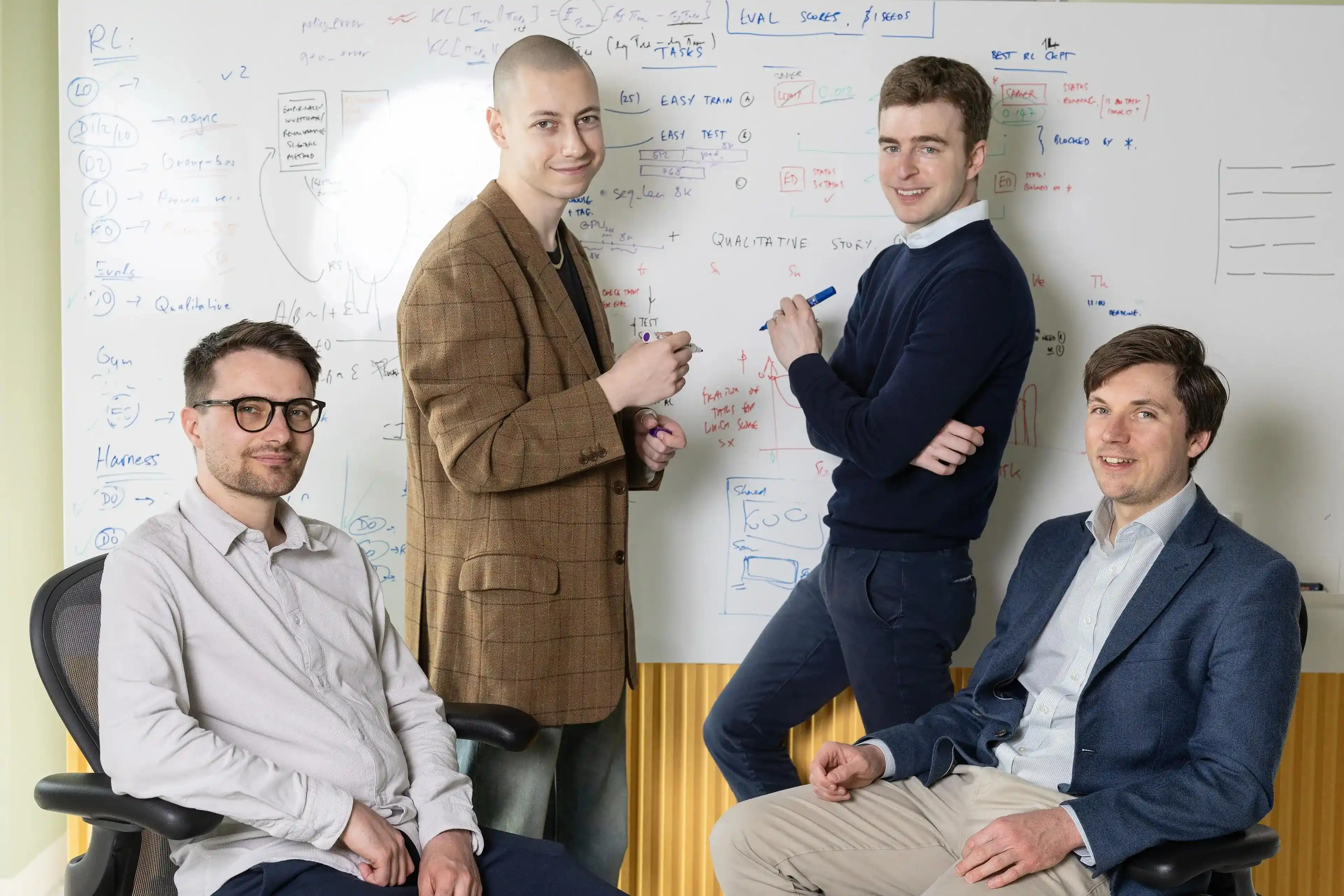
Inherent, an artificial-intelligence startup founded by former Google DeepMind researchers, claims its autonomous research teammate has outperformed systems from Anthropic and OpenAI on the demanding task of independently reproducing published scientific findings — a benchmark family that has rapidly become the field's newest credibility test. The company says its agent completed end-to-end replication studies, from reading a paper's stated methodology to rerunning the underlying experiments and writing up verified results, at accuracy rates comfortably ahead of the frontier-lab incumbents.
Replication matters enormously because modern science runs on a reproducibility deficit: a substantial share of published results in machine learning and the biomedical literature cannot be trivially rerun, and manual verification consumes enormous quantities of skilled researcher hours. An agent that can audit papers at industrial scale therefore promises real value to laboratories, journals and, perhaps most lucratively, pharmaceutical companies screening acquisition targets before writing large checks.
Inherent's pitch also leans heavily on architecture. Where general-purpose assistants optimize for conversational breadth, the startup has trained its teammate specifically for long-horizon scientific workflows — maintaining experimental state across sessions, debugging failed runs and deciding when a reproduced result genuinely matches the original claim. The DeepMind pedigree has helped with fundraising; investors have reportedly committed generously on the strength of the founding team's own publication record.
Skeptics caution that vendor-run benchmarks reliably flatter vendors, and neither Anthropic nor OpenAI has endorsed the comparison. Independent evaluation, several academics noted, will ultimately decide whether Inherent has built a genuine robotic researcher or simply a very fast literature assistant wearing a lab coat.