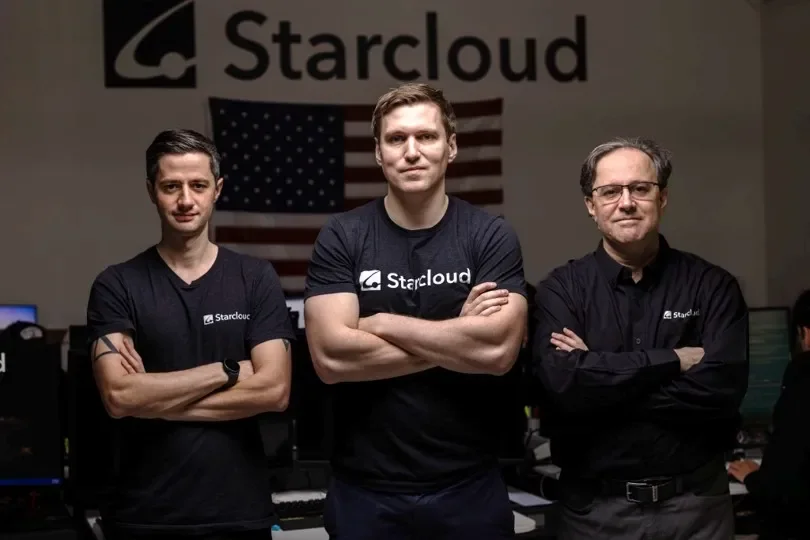
Starcloud, the startup betting that the next generation of cloud computing will happen in orbit, has raised $250 million to build space-based data centers — even as the launch capacity it fundamentally depends upon grows steadily harder to secure. The round ranks among the largest ever devoted specifically to orbital compute, and its timing is deliberate: the company wants contracted rides and flight-proven hardware in hand before the window of available launch vehicles narrows any further against insatiable constellation demand.
The underlying thesis is physics, not hype. Training and inference workloads are straining terrestrial power grids and water supplies to their limits, while solar energy in orbit is effectively free, continuous and unconstrained by permitting queues. Starcloud proposes satellite clusters housing commercial graphics processors that train models in space and downlink the results, converting a data-center siting problem into a thermal-engineering and launch-logistics problem instead.
Supporters point to early demonstrations in which the company's orbital GPUs completed genuine machine-learning tasks, proving the core concept can survive vacuum, radiation and extreme thermal cycling. Skeptics counter that the economics remain premature: radiation hardening, bandwidth ceilings and on-orbit repair costs are unsolved at scale, and launch scarcity inflates every single line item in the business plan.
That scarcity is precisely what the new capital is meant to retire, through prepayments and a diversified roster of launch providers. Whether Starcloud becomes foundational infrastructure or an expensive orbital experiment, this round signals that space compute has moved decisively from pitch deck to procurement plan.